Open-source software
SPMF
SPMF is a widely used open-source data mining software and library written in Java. It provides efficient implementations of more than 300 algorithms for discovering patterns in data, including sequential patterns, sequential rules, association rules, high-utility patterns, frequent itemsets, periodic patterns, episodes, clusters, subgraphs, and more.
SPMF is designed for both research and practical applications. It offers a simple API for developers, as well as a graphical user interface and a command-line interface for users and to facilitate integration with other software. SPMF includes numerous example datasets, detailed documentation, making it suitable for teaching purposes and research. The library includes implementations of several algorithms developed by my team such as EFIM, PHM, FHM+, FHM, VGEN, CM-SPADE, CM-SPAM, TKS, VMSP, CMRules, RuleGrowth, RuleGrowth, TopKRules, TopSeqRules, TNR, TSEQMiner, HUE-SPAN, TKG, and TNS, as well as many algorithms proposed by other researchers.
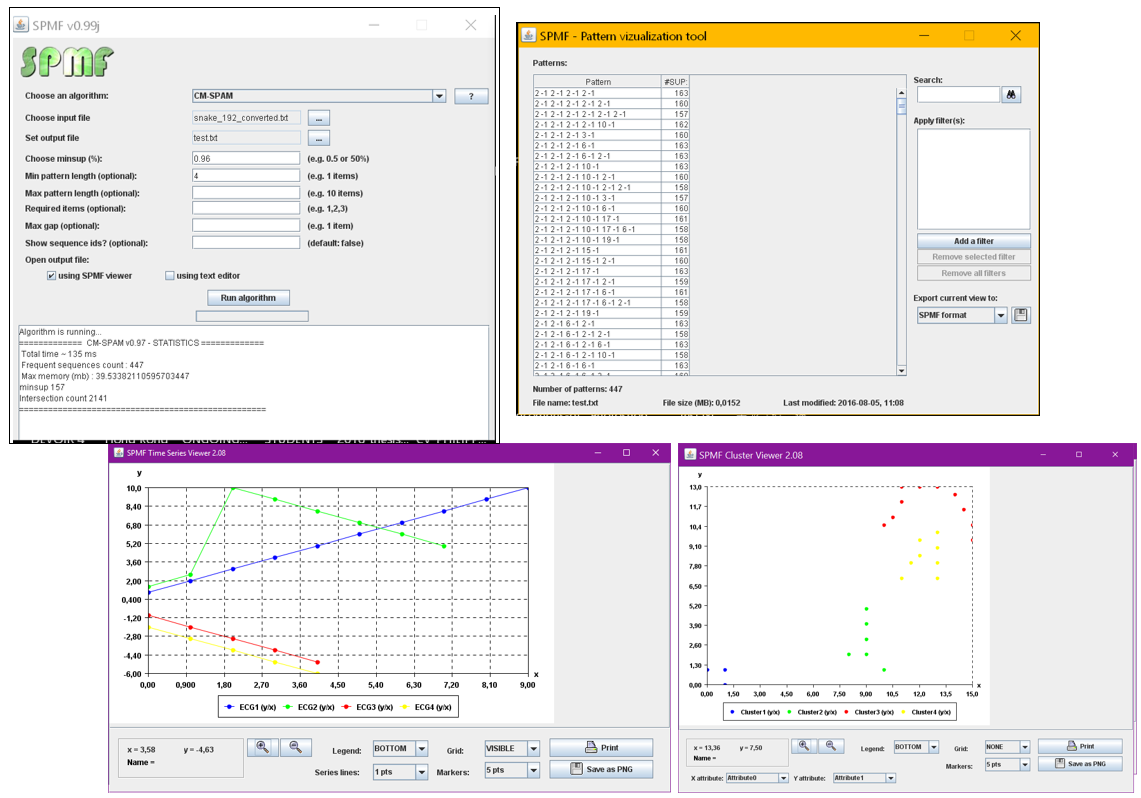
Since its first release,SPMF has been cited in more than 1000 articles, demonstrating its strong impact in the data mining community. The software has been applied in a wide range of fields such as:
|
|
Publications:
- Fournier-Viger, P., Lin, C.W., Gomariz, A., Soltani, A., Deng, Z., Lam, H. T. (2016). The SPMF Open-Source Data Mining Library Version 2. Proc. of PKDD 2016 Part III. Springer, pp. 36-40.
- Fournier-Viger, P., Gomariz, A., Gueniche, T., Soltani, A., Wu., C., Tseng, V. S. (2014). SPMF: a Java Open-Source Pattern Mining Library. Journal of Machine Learning Research (JMLR), 15: 3389-3393.
PL-PLAN
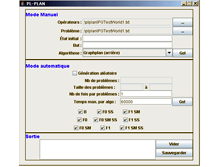
PL-PLAN is a lightweight artificial intelligence planning framework that provides implementations of Graphplan as well as six algorithms based on partial-order planning for classical state-space search problems. It is designed as a simple and extensible platform for experimenting with planning algorithms and understanding their behavior.
This project was developed in collaboration with Ludovic Lebel.
Proprietary software
CanadarmTutor
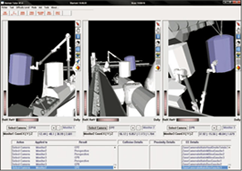
CanadarmTutor is an intelligent tutoring system designed to help users learn how to operate the Canadarm2 robotic arm, developed with the GDAC/Planiart labs, in collaboration with the Canadian Space Agency.. The system provides interactive simulations, guidance, and feedback to support skill acquisition in a complex and safety-critical domain. It incorporates artificial intelligence techniques to adapt to the learner’s progress and provide personalized instruction. The system has been used as a research platform for studying intelligent tutoring systems and human-computer interaction in training environments.
Publications:
- Fournier-Viger, P., Nkambou, R., Mephu Nguifo, E., Mayers, A., Faghihi, U. (2013). A Multi-Paradigm Intelligent Tutoring System for Robotic Arm Training. IEEE Transactions on Learning Technologies (TLT), 6(4): 364-377.
- Fournier-Viger, P., Nkambou, R., Mayers, A., Mephu Nguifo, E., Faghihi, U. (2012). Multi-Paradigm Generation of Tutoring Feedback in Robotic Arm Manipulation Training. Proceedings of the 11th Intern. Conf. on Intelligent Tutoring Systems (ITS 2012), LNCS 7315, Springer, pp. 233-242.
- Fournier-Viger, P., Nkambou, R., Mayers, A., Mephu Nguifo, E., Faghihi, U. (2011). An Hybrid Expertise Model to Support Tutoring Services in Robotic Arm Manipulations. Proceedings of the 10th Mexican Intern. Conference on Artificial Intelligence (MICAI 2011), LNAI 7094, Springer, pp. 478-489.
- Nkambou, R, Fournier-Viger, P., Mephu Nguifo, E. (2009). Improving the Behavior of Intelligent Tutoring Agents with Data Mining. IEEE Intelligent Systems, 24(3):46-53.
CTS
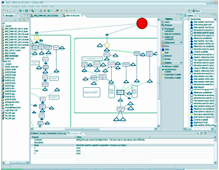
CTS (also known as CELTS) is an intelligent cognitive agent developed by the GDAC Lab to assist learners during learning activities. It models cognitive processes such as attention, memory, and decision-making to provide context-aware support. The system can interact with learners in real time, offering hints, feedback, and guidance tailored to the user’s current state and goals. CTS has been used in various research projects exploring cognitive architectures and adaptive learning systems.
Publications
- Faghihi, U., P. Fournier-Viger, Nkambou, R. (2012). A Computational Model for Causal Learning in Cognitive Agents, Knowledge-Based Systems, Elsevier, 30, 48-56
- Faghihi, U., Poirier, P., Fournier-Viger, P., Nkambou, R. (2011). Human-Like Learning in a Cognitive Agent. Journal of Experimental & Theoretical Artificial Intelligence, Taylor & Francis, 23(4): 497-528.
Redbool
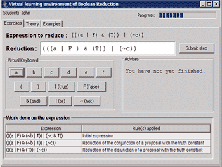
Redbool is an intelligent tutoring system designed to support the learning of Boolean expression simplification. It provides step-by-step guidance, automatic feedback, and error detection to help students understand reduction techniques. The system allows learners to practice simplifying expressions while receiving immediate feedback on each step, promoting active learning and conceptual understanding. It was developed by the ASTUS Lab.
- Fournier-Viger P., Najjar, M., Mayers, A. & Nkambou, R. (2006). A Cognitive and Logic based Model for Building Glass-box Learning Objects. Interdisciplinary Journal of Knowledge and Learning Objects, Vol. 2. pp: 77-94.
- Fournier-Viger P., Najjar, M., Mayers, A. & Nkambou R. (2006). From Black-box Learning Objects to Glass-Box Learning Objects. Proc. 8th Intern. Conf. on Intelligent Tutoring Systems (ITS 2006). LNCS 4053, pp: 258-267, Springer-Verlag, Berlin.
Dokgett
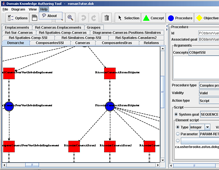
Dokgett is a software tool for visually designing cognitive models. It provides an intuitive graphical interface for creating, editing, and analyzing models representing cognitive processes and interactions. The tool facilitates the development and experimentation of cognitive architectures by allowing users to structure complex models in a clear and visual manner. It is particularly useful for researchers working in artificial intelligence, cognitive science, and intelligent tutoring systems.
Publications
- Fournier-Viger, P., Najjar, M., Mayers, A., Nkambou, R. (2006). A Cognitive and Logic based Model for Building Glass-box Learning Objects. Interdisciplinary Journal of e-Skills and Lifelong Learning, 2:77-94.
Online Tools
Paper Review Generator
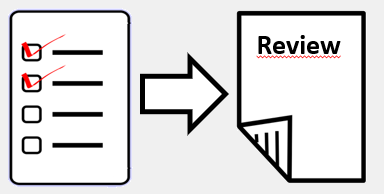
The Paper Review Generator is a web-based tool designed to assist reviewers by automatically generating draft reviews based on selected evaluation criteria. By selecting predefined checkboxes related to common review aspects, users can quickly obtain structured review text that can be further refined.
Other tools
I have also developed several additional online tools for researchers and students.